Three Seoul shopping formats solve different visitor problems
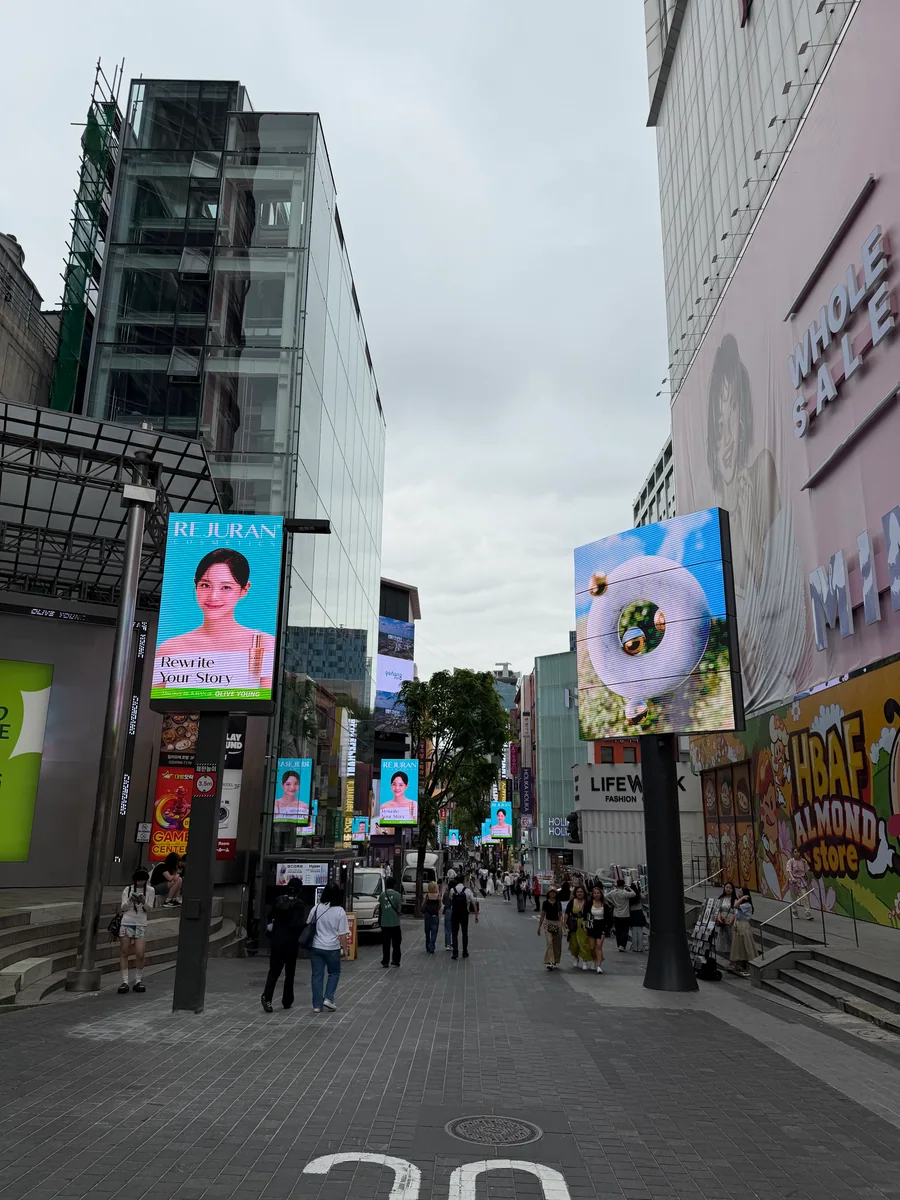
Myeongdong is useful when you want density and comparison in a short window. Korea Tourism Organization’s current Myeongdong guide describes a concentration of road shops, department stores, duty-free shops, and Olive Young Myeongdong Town, where multiple brands and testers can sit in one browsing route. The practical advantage is not that every store has the same assortment or promotion. It is that you can compare formats quickly: a multi-brand store for side-by-side shelves, a brand shop for a narrower range, and a department or duty-free counter for a different sales and fulfilment process.Korea Tourism Organization: Myeongdong shopping guide, including road shops, department stores, duty-free formats, and Olive Young Myeongdong Town
Seongsu is a different kind of research stop. The Korea Tourism Organization characterizes the neighbourhood through concept shops, pop-ups, and brand spaces, including Amore Seongsu, where visitors can try products from several brands. That makes Seongsu more useful when you have time to understand a brand world, sample textures without an immediate purchase plan, or treat the visit as part of a design-and-cafes day. A pop-up can be memorable, but it may be temporary, busy, or focused on one campaign. Check the organiser’s current page before travelling across the city for a specific experience.Korea Tourism Organization: Seongsu shopping guide, including concept shops, pop-ups, and Amore Seongsu
Duty-free, department-store, and airport formats are best treated as separate transactions, not as a cheaper version of any street shop. They may involve passport details, collection rules, travel timing, stock restrictions, or a counter that does not work like a neighbourhood retailer. Use them when their process matches your trip, not because a social post implies a universal bargain. The same applies to online pickup, hotel delivery, or a brand’s visitor event: read the current terms directly from the seller before payment.Korea Tourism Organization: Myeongdong shopping guide, including road shops, department stores, duty-free formats, and Olive Young Myeongdong Town
Use a five-step sequence before any basket gets heavy
Start with the tester, but keep a tester separate from a promise. Ask whether a sample is single-use, whether an open tester is intended for a particular application, and whether staff can provide a disposable applicator. If you know you react to a fragrance, colour cosmetic, or ingredient, read the label before applying it widely and avoid treating a quick in-store patch as proof that a product will suit you. Hygiene practices and tester availability can change by store, so follow the staff’s current instruction rather than copying a routine from another visitor.
Then read the product as a label, not an aesthetic object. Korea’s Ministry of Food and Drug Safety explains that regulated functional-cosmetics categories cover specified claim types such as whitening, wrinkle improvement, UV protection, hair-loss symptom relief, acne-prone-skin care, stretch-mark reduction, hair removal, and deodorization. That category framework is not a guarantee that a product will change your skin or body in a particular way. It is a reason to slow down when a shelf sign, translation app, or salesperson condenses a claim into a dramatic result.Ministry of Food and Drug Safety: functional cosmetics categories and permitted functions
Finally, make the payment legible. Before the card is presented, ask for the final item count, any bundle condition, the return or exchange process, and whether a tax-refund process applies to that exact transaction. Do not rely on an old travel video for coupon codes, price comparisons, tax-refund thresholds, or airport procedures. Promotions and rules change. Keep the receipt and any tax paperwork together, take a clear photo of the product label if it matters to you, and verify current terms at the store and with the relevant official service before departure.
CHOOSE YOUR NEXT QUESTION
Continue through the issue
Claims, ingredients, and translations deserve a slower read
A label can be more useful than a recommendation list because it tells you what you are actually taking home. Look for the product name, intended use, directions, volume, date or batch information where shown, ingredients, and the seller’s return rules. If a translation is unclear, use it to generate a question for staff rather than treating it as a final regulatory interpretation. Ask whether the product is fragrance-free only if the label or manufacturer says so; “lightly scented” and “natural” are not reliable substitutes for an ingredient list.
Fragrance is one area where the exact label matters. The Ministry of Food and Drug Safety announced a list of 20 fragrance allergens that must be labelled for cosmetic products when present above stated thresholds, with the transition conditions described in its notice. The regulatory detail is not a shopping shortcut or a medical screening tool. It does mean that a visitor concerned about fragrance has a concrete reason to inspect the packaging, save the manufacturer’s product page, and ask a pharmacist or qualified clinician about a persistent reaction rather than assuming a viral product is safe for everyone.Ministry of Food and Drug Safety: fragrance allergen labelling notice for cosmetics
The same boundary applies to sunscreen, acne, brightening, scalp, and hair-loss language. A Korean functional-cosmetics label may use a regulatory category that does not map neatly onto another country’s rules or a visitor’s existing routine. Pack with your destination’s customs and product rules in mind, and do not treat a Seoul purchase as a substitute for medical care. If you are managing a diagnosed skin condition, pregnancy-related question, severe allergy, or medication interaction, seek advice from an appropriate healthcare professional before experimenting.Ministry of Food and Drug Safety: functional cosmetics categories and permitted functions
Build one modest route instead of an all-day haul
A calm Myeongdong route can begin with a multi-brand stop for comparison, continue to one or two brand counters only when you have a specific question, and end with a department or duty-free counter if you already understand its collection terms. Put a note beside each item: replace, compare, gift, or merely interesting. That single word prevents the common problem of repurchasing the same category because the packaging or bundle changed. The goal is not to empty a list; it is to leave knowing why each item made the bag.
A Seongsu route can work better as a research day. Visit one brand space or pop-up, take notes on products you want to revisit, then choose one later purchase location after you have eaten, rested, and checked the exact terms. Korea Tourism Organization’s Beauty Play listing is useful context here: it presents a visitor-facing beauty space where guests can explore Korean cosmetics and cultural programming, which is different from a normal sales shelf. Experiences can help you learn vocabulary and preferences, but they should not force a purchase on the spot.Korea Tourism Organization: Beauty Play visitor beauty-experience listing
For either neighbourhood, set a carrying limit and a decision limit. Buy replenishments you understand; photograph products you need to compare; postpone anything whose price, claim, return condition, or ingredient list you cannot parse. That is not missing the Seoul beauty experience. It is treating a highly visual retail culture with enough patience to make it enjoyable after you are home.
ISSUE COMPANION
Choose a Seoul beauty-shopping format
Use this as a route selector, not a ranking. Each format can be useful when its process matches your goal and time.
| Myeongdong multi-brand stop | Choose this for fast category comparison, a dense retail route, and a chance to inspect several brands before deciding.Confirm the final promotion and tax-refund process at the actual counter. |
|---|---|
| Myeongdong brand shop | Choose this when you already know the brand and need product-specific directions, ingredients, or return terms.A campaign display is not a reason to assume every item or promotion is included. |
| Seongsu concept space or pop-up | Choose this for discovery, brand context, textures, exhibitions, and a slower visit rather than a fixed shopping list.Check dates, entry rules, and stock directly because pop-ups can change quickly. |
| Department-store counter | Choose this when you want a specific counter service, a familiar retail process, or a comparison within one building.Ask about returns, samples, and whether the displayed price includes any current condition. |
| Duty-free or airport collection | Choose this only when the collection, passport, flight, and timing requirements fit your itinerary.Verify collection location, travel-document requirements, and changes before checkout. |
| Beauty experience space | Choose this when you want vocabulary, product exploration, or a cultural activity before deciding what to buy.An experience may inform a purchase, but it does not obligate one. |
FREE SKIN-DESK TOOL
Have a Korean package in front of you?
Paste the label text into our browser-only reader to find package fields, common product words, Korean functional-cosmetic wording, and claims that still need context.
EVIDENCE & EDITORIAL RECORD
How this story was made
Reframes Myeongdong, Seongsu, and duty-free shopping around product-finding, testing, comparison, label, receipt, and collection tasks rather than rankings.
Firsthand scope: No shopping visit, tester, price comparison, stock check, or product performance test is claimed.
What we checked
- KTO records distinguish Myeongdong's multi-store shopping from Seongsu's concept-shop and pop-up formats.
- MFDS records provide the functional-cosmetics and fragrance-allergen context used for package checks.
Verify before you use this guide
- Live stock, testers, promotions, returns, tax refund, receipt, and collection terms.
- Exact ingredients, directions, warnings, expiry information, and market-specific claims.
Review dates describe editorial work, not a venue visit or publication date. Read the sourcing and corrections policy →
PRIMARY RECORDS
Records used in this guide
- Korea Tourism Organization: Myeongdong shopping guide, including road shops, department stores, duty-free formats, and Olive Young Myeongdong Town
- Korea Tourism Organization: Seongsu shopping guide, including concept shops, pop-ups, and Amore Seongsu
- Ministry of Food and Drug Safety: functional cosmetics categories and permitted functions
- Ministry of Food and Drug Safety: fragrance allergen labelling notice for cosmetics
- Korea Tourism Organization: Beauty Play visitor beauty-experience listing