A cooking class can be a market visit, a workshop, a meal, or a cultural programme
English search pages often place every hands-on food experience under one label. Seoul operators do not all offer the same event. Korea Tourism Organization’s English overview lists programmes built around dishes such as kimchi, bulgogi, bibimbap, rice cakes, royal cuisine, and home cooking. Its current directory also shows why a title alone is incomplete: programmes differ in venue, language support, operating pattern, and the food being made. A traveller choosing by the photograph may arrive expecting a market tour and find a demonstration, or expect a full lunch and make one item to take away.Korea Tourism Organization: current English overview of Korean cooking programmes
Start with the scene you want to understand. A market-led class is about ingredients, shopping language, and the route from stall to kitchen. A kimchi workshop narrows the focus to one preparation and its cultural setting. A home-style class usually makes several recognisable dishes and ends at a shared table. A temple-food class places ingredients and technique inside a Buddhist food tradition. All four can be meaningful. They simply answer different questions, and a short trip may leave room for only one.
The official pages used here are evidence that these formats exist, not a live inventory of seats. VisitKorea warns that published details can differ from current conditions, and individual venue pages can change after an article is updated. Treat this guide as a comparison layer. Once a format fits, move to the operator’s current page and confirm the exact programme, date, language, menu, price, meeting point, and cancellation terms before paying.Korea Tourism Organization: current English overview of Korean cooking programmes
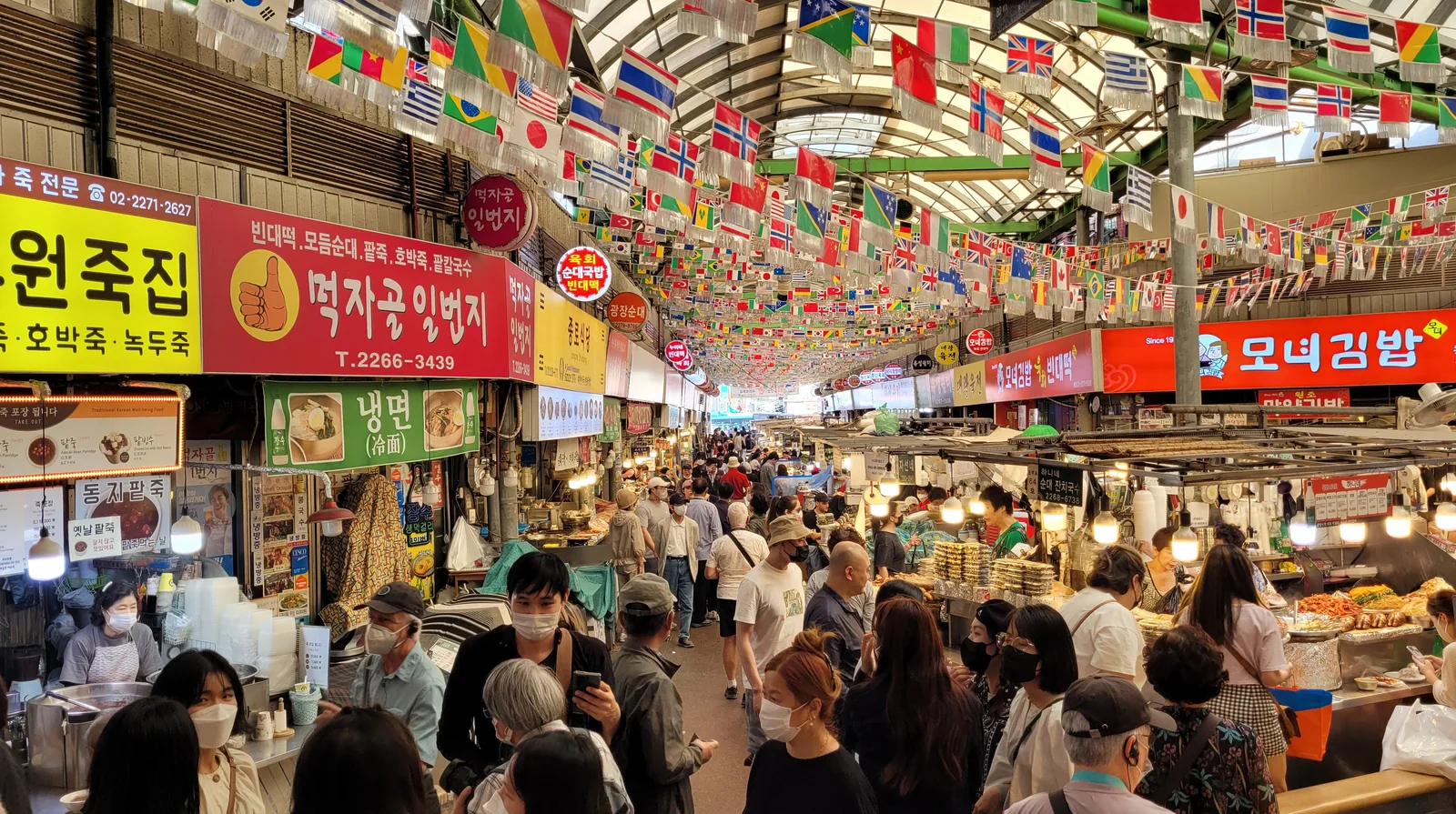
Choose a market-led class when the ingredient trail is part of the story
A market-led class adds a public place before the kitchen. VisitKorea’s OME Cooking Lab profile describes a programme that begins with choosing ingredients in a local market and interacting with vendors, then moves to cooking and a meal in a hanok setting. That sequence offers more than extra sightseeing. It lets a visitor see how an ingredient is displayed, named, measured, and carried into a recipe. The trade-off is a longer, more mobile experience with more transitions than a class held entirely at one workstation.Korea Tourism Organization: OME Cooking Lab market-led class profile
Ask whether the market portion is guided shopping, a tasting walk, or simply a meeting route. Confirm how much walking is involved, whether stairs or crowded aisles are likely, and where the class finishes. A meeting point and an ending point can be different. If you plan another reservation immediately afterward, that distinction matters. Language also matters in two places: the instructor may teach in English while brief exchanges with vendors happen through the guide. That is normal, but it is worth understanding before you book.
A market class suits the traveller who wants context around the recipe and does not mind giving part of the session to movement and observation. It is a weaker fit for someone who wants maximum hands-on stove time, needs a fully seated format, or has a tightly timed itinerary. The market itself is a working food environment, not a private set. Follow the guide, ask before filming vendors closely, and avoid turning every stall into a backdrop. The visit becomes more useful when you notice the route and the transactions as carefully as the finished plate.
CHOOSE YOUR NEXT QUESTION
Continue through the issue
Choose a focused workshop when one technique is enough
A kimchi or rice-cake workshop compresses the experience around one named food. The official Visit Seoul page for Seoul Kimchi Academy describes an English-language kimchi experience in a hanok setting, while VisitKorea’s Museum Kimchikan feature describes classes connected to a museum devoted to kimchi and kimjang culture. These examples illustrate two possible frames: a practical workshop in a traditional-style setting, or a making session connected to exhibitions and archives. Neither format represents every household recipe or every regional tradition.Official Seoul Tourism Guide: Seoul Kimchi Academy visitor information Korea Tourism Organization: hands-on kimchi and temple-food experience formats
Focused workshops work well when you want a clear subject, a shorter decision process, and an object or technique you can remember. Read the menu literally. “Kimchi class” can mean seasoning prepared cabbage, making a particular variety, watching part of the process, or combining a demonstration with photos and tasting. Ask what participants make themselves, whether the ingredients are prepared in advance, whether the result is eaten on site or packed, and whether transport or refrigeration instructions are provided for anything taken away.
Kimchi also creates specific ingredient questions. Recipes may use seafood products, fish sauce, salted shrimp, alliums, sweeteners, or other ingredients that matter to a guest. A general description such as vegetarian-friendly does not answer an allergy or cross-contact question. Contact the current host with the exact ingredient and the level of concern. A culture magazine cannot turn a programme title into a dietary guarantee. If the host cannot give a clear answer, selecting a different workshop is a reasonable part of planning.
Choose a home-style class when you want the table to come together
A multi-dish home-style class shifts attention from one iconic food to the relationships among dishes. VisitKorea’s cooking-class overview lists programmes built around combinations such as bibimbap, bulgogi, japchae, pancakes, stews, and street foods. HANSIK Space E:eum, operated by the Korean Food Promotion Institute, describes a learning centre where participants cook and taste Korean food with seasonal ingredients and fermented foods, with classes offered for international attendees. These are examples of a broader format: several tasks accumulate into a meal rather than ending with one technique.Korea Tourism Organization: current English overview of Korean cooking programmes Korean Food Promotion Institute: HANSIK Space E:eum learning centre
The phrase hands-on can still hide important differences. In some classes, each person has a station. In others, a pair or group divides the chopping, seasoning, frying, and plating. An instructor may prepare time-consuming components before guests arrive. Ask how many dishes are included, which parts participants perform, whether the class is shared with other bookings, and whether eating time is included inside the advertised duration. If you want knife work, fermentation theory, or a recipe you can reproduce abroad, say so before selecting a class rather than assuming the menu will cover it.
This format is strong for travellers who want a social meal and a wider view of Korean table structure. It can also require more standing, coordination, and food handling. Age rules, accessible workstations, and companion policies belong to the live programme, not to the category. Families should confirm whether every child needs a paid place and which tasks children can join. Solo travellers should check whether the session runs with one booking or requires a minimum group. Those practical details decide whether an attractive menu becomes a workable afternoon.
Choose temple food when the cultural framework matters as much as the recipe
A temple-food class is not simply the meat-free option on a cooking-class list. The Korean Temple Food Center presents short experience programmes connected to Korean Buddhist food culture, ingredients, and preparation. A class can introduce methods and dishes within that tradition, while a temple stay places meals inside a wider schedule of communal life and conduct. The difference matters. A visitor seeking two hours of cooking should not book a stay for the scenery, and a visitor seeking a temple rhythm may find a city workshop intentionally narrow.Korean Temple Food Center: official short experience programme directory Korea Tourism Organization: hands-on kimchi and temple-food experience formats
Read the host’s description for the dish, participation level, language, conduct, and setting. Confirm whether the session is a demonstration, a hands-on class, or a combined cultural talk. Ask about photography and arrival time. A quiet or formal room should not be treated as an entertainment theme. The instructor or institution is sharing a specific programme, not granting visitors authority to present one lesson as the complete rulebook of Korean Buddhist cuisine.
Do not use temple food as shorthand for detox, weight loss, purity, or universal dietary suitability. Ingredients, sauces, fermentation, and cross-contact still require a direct answer from the current host. The value of the class is cultural and practical: attention to an ingredient, a method, a season, and the setting in which the food is prepared. Readers who want the wider distinction among a restaurant meal, a city class, and a temple-stay meal can continue to our dedicated temple-food guide.
The booking page should answer seven ordinary questions
Before payment, write down the exact programme name and date. Then check language, menu, duration, meeting point, ending point, group format, and what the fee includes. Look for a cancellation deadline and a way to contact the operator. If the page shows an old review, a third-party listing, or a social post, use it for atmosphere only and return to the current operator for the transaction. Screenshots can help you remember what was offered, but the live confirmation and receipt are the records that matter.Korea Tourism Organization: current English overview of Korean cooking programmes Korea Tourism Organization: OME Cooking Lab market-led class profile
Send ingredient, mobility, age, or participation questions before the cancellation window begins. Use plain detail: name the ingredient, ask whether the class includes market walking, explain whether a child will cook or observe, or request the location of stairs and seating. Avoid sending medical history that the operator does not need. A host can explain the programme and ingredients; a qualified professional is the right person for personal medical or allergy-management advice.
Finally, leave space for the class to be specific. You may learn one household method, one instructor’s sequence, or one institution’s interpretation. Record the Korean and English names of the dishes, the ingredient that surprised you, and one step you want to verify later. That small field note is more accurate than declaring that you have learned how all Koreans cook. A good class gives you a closer question and a clearer memory, not a certificate to generalise a living cuisine.
ISSUE COMPANION
The Seoul cooking-class format card
Match the session to the part of Korean food culture you want to see, then verify the current operator details.
| Market tour + cooking | Best suited to ingredient context, vendor interaction, and a longer route from market to kitchen.Confirm walking, meeting and ending points, market activity, language support, and total duration. |
|---|---|
| Kimchi or single-dish workshop | Best suited to a focused technique and a clearly named cultural subject.Confirm what you make yourself, ingredient details, tasting, packing, and minimum attendance. |
| Home-style multi-dish class | Best suited to seeing several dishes become one shared Korean table.Confirm individual versus shared stations, actual hands-on steps, meal time, age rules, and group size. |
| Temple-food class | Best suited to learning a dish inside a specific Korean Buddhist food-culture framework.Confirm programme type, conduct, language, ingredients, and whether the session is a class or demonstration. |
| Dietary or allergy question | Send the exact ingredient and cross-contact question to the current operator before payment.A category label, previous review, or general menu description is not an individual safety guarantee. |
| Booking record | Keep the programme name, date, current confirmation, cancellation terms, meeting point, and receipt together.Schedules, prices, menus, languages, and access details can change after an editorial guide is updated. |
EVIDENCE & EDITORIAL RECORD
How this story was made
Compares market-led, focused workshop, home-style, and temple-food formats while moving all transaction and dietary details to the live operator.
Firsthand scope: No class attendance, recipe test, kitchen inspection, or instructor comparison is claimed.
What we checked
- KTO records document market-led, kimchi, home-cooking, and other visitor programme formats.
- Korean Food Promotion Institute and Temple Food Center records establish distinct learning-centre and temple-food contexts.
Verify before you use this guide
- Menu, date, price, language, meeting point, group format, access, and cancellation.
- Ingredients, allergy handling, cross-contact, take-away, refrigeration, and transport.
Review dates describe editorial work, not a venue visit or publication date. Read the sourcing and corrections policy →
PRIMARY RECORDS
Records used in this guide
- Korea Tourism Organization: current English overview of Korean cooking programmes
- Korea Tourism Organization: OME Cooking Lab market-led class profile
- Korean Food Promotion Institute: HANSIK Space E:eum learning centre
- Korea Tourism Organization: hands-on kimchi and temple-food experience formats
- Official Seoul Tourism Guide: Seoul Kimchi Academy visitor information
- Korean Temple Food Center: official short experience programme directory