1. Start with a place and a programme as two different records
A destination listing and a confirmed activity are not the same thing. The first can tell you where a forest centre is. The second needs a date, a format, a meeting point, and the operator’s current instruction. Keeping them separate is especially important with the phrase “forest therapy,” which is easy to mistake for a medical recommendation when it is actually the name of a forest-welfare setting and its programmes.
The Korea Tourism Organization identifies the National Center for Forest Therapy, Jecheon as a Jecheon wellness destination. The Korea Forest Welfare Institute, which operates the centre record used for practical details here, lists it at 590 Hakhyeonsoya-ro, Cheongpung-myeon, Jecheon-si and names four forest paths, an herb garden, the centre building, and parking; its programme record says that programmes use advance reservation. Those records support planning around an official place and programme category. They do not confirm a place in a session, an English-speaking host, a current opening, a price, or a result for a visitor.[7][1][2]
Begin with one plain sentence: “I want a forest visit,” or “I want a confirmed operator-led programme.” If the first is true, protect time for the final approach, the conditions underfoot, and the way back. If the second is true, make the operator-confirmed meeting and finish times the anchor of the day. Do not add a programme just because the word therapy makes a walk sound more complete.
2. Build the Jecheon day from the true Seoul departure point
“Seoul to Jecheon” is a planning label, not a transport itinerary. A traveller may be leaving from an airport hotel, a Seoul neighbourhood, a regional rail station, or somewhere outside Seoul altogether. Each changes the first connection, the last local leg, the amount of daylight available, and the return margin. Start from the address where you will actually wake up rather than from a generic city name.
FoWI publishes the Jecheon centre’s address and an access outline that includes a driving route and a public-transport direction using city bus 952 to Sanghakhyeon followed by a final walk. Treat that as an operator-provided orientation, not a promise that a particular connection or return trip will exist at your hour. Check the live outward and return route on the day, including the final approach after the last vehicle.[1]
A realistic day has one firm anchor and a generous edge. Put a confirmed programme in the middle if you have one. Keep the forest portion flexible if you do not. Do not stack a lake, cable car, museum, restaurant, and the forest centre into one chain before the final return route is settled. A smaller Jecheon day is not a lesser day when it prevents a last connection from becoming the whole story.
CHOOSE YOUR NEXT QUESTION
Continue through the issue
3. Read programme labels literally, not as health claims
Programme names can sound expressive in translation. The responsible question is not what a name might do for a visitor; it is what the operator says will happen in the session and whether that session is actually running. An official English navigation page or a facility category is not language confirmation for the activity itself.
FoWI’s programme record separates an individual, one-hour indoor tea-related format from group formats shown for larger parties, including walking-led programmes. The record also places programme use behind advance reservation. This is useful for identifying questions to ask about party size, programme format, meeting point, language, and finish time. It does not establish a session for any particular date or that a format is suitable for a particular visitor.[2]
Before travel, keep the exact current programme name in the same written record as the date, start and finish time, meeting point, party rule, language support, and any participation instructions. If one of those fields is missing, leave the programme out of the itinerary. A forest centre can still be a possible destination; a named programme is not a reservation until the operator has confirmed the relevant details.
4. Let weather and footwear change the plan early
A forest day is not a museum visit with trees around it. Rain, heat, wind, poor visibility, wet surfaces, and a weather warning can change the practical decision long before you are at the centre. Weather should therefore be a close-to-departure check, not a decorative seasonal forecast read days earlier.
The Korea Meteorological Administration publishes short-range forecasts and severe-weather notices through its English service. Use both for the Jecheon area close to departure, then check the centre’s current access or programme notice directly. A regional forecast cannot confirm the state of a particular path, entrance, programme, or final walking approach.[5][6]
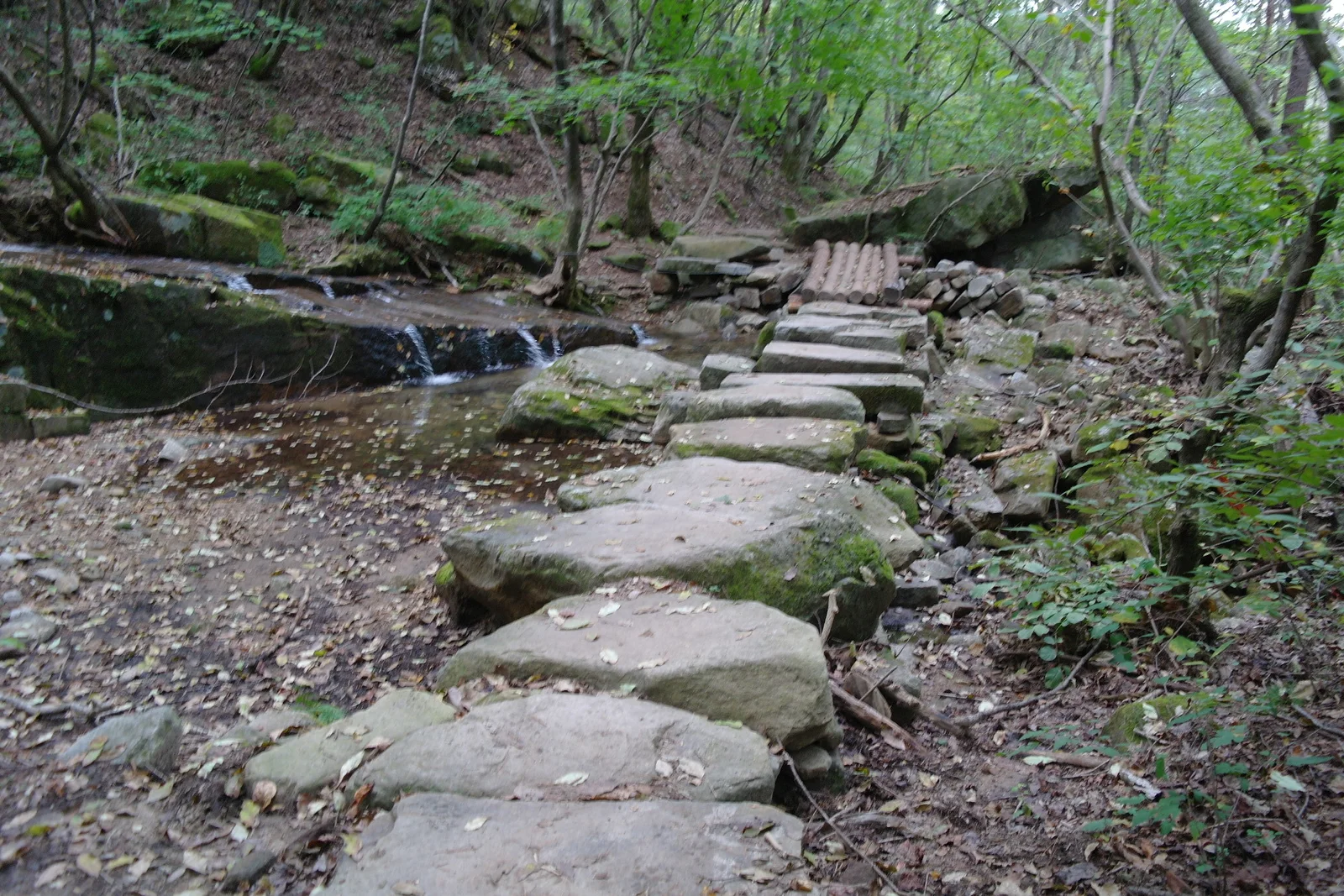
FoWI’s visitor guidance asks programme participants to wear clothing comfortable for outdoor activity and athletic shoes, and notes that programme operation can control some trails. That is a current operator boundary, not a trail-difficulty rating, a weather guarantee, or personalised footwear advice. Follow the current instruction for the part of the site you plan to use rather than treating one itinerary photo as evidence of conditions.[4]
5. Treat access as a route-specific conversation
Access is not one universal property of a forest centre. It can change between a parking area, a meeting point, an indoor room, a deck route, and a path with stream-side or elevation conditions. A map pin does not tell you the final surface, the relevant entrance, whether a route is open, or what support a person may need that day.
FoWI’s facilities record describes one deck route as designed with children, older adults, and wheelchair users in mind, while separately listing other paths with different physical characteristics. This supports asking about the exact route or programme you mean. It does not certify the whole centre as accessible, guarantee current conditions, or determine whether the route fits any individual’s needs.[3]
Ask for the exact entrance or meeting point, the route name, any current restriction, the final approach after transport or parking, and the support or facility details relevant to you. If you need a route to be step-free, level, available in English, or supported in another specific way, that is a direct operator question—not something this article can infer from a deck-route description.
6. Plan the return before adding a second attraction
The return is part of the forest day, not an afterthought. A programme that ends later than expected, a slower final walk, or a weather-related change can turn a tightly connected itinerary into a rushed one. The right response is not to assume everything will run perfectly; it is to create room before committing to optional stops.
FoWI’s visitor guidance identifies operational boundaries including programme-reservation customer parking and rules for centre use. Together with the centre directions, those records are a reason to verify the same-day arrival and exit process directly. They do not confirm a parking space, the last local connection, a taxi, or a missed-connection fallback for a traveller.[1][4]
Before leaving Seoul, know the latest time you are willing to leave the centre, the live route back to your actual destination, and one response if the first option changes. If that information is unresolved, keep Jecheon as research or make the day smaller. The goal is not to prove that you can fit more in; it is to keep the forest time from being overshadowed by an avoidable transport problem.
7. A useful forest day is a verified, modest one
Jecheon does not need a promise of healing to be worth considering. The editorial value is practical: distinguish an official forest setting from a date-specific programme, preserve the boundary between a destination and a booking, and let live conditions decide what is still sensible on the day. That leaves the reader with a route they can verify rather than an outcome they are asked to believe.
Use the Forest Day Reality Check below as a private planning prompt. It asks only whether the essentials have been checked: programme shape, language, arrival, route-specific access, weather, shoes and clothing, and return. It does not store answers, book a place, send an inquiry, or tell you whether travel is safe or suitable. An unresolved field is simply a reason to keep researching.
ISSUE COMPANION
Jecheon Forest Day Reality Check
Use these six checks to see whether an idea has become a verifiable day plan. This is not health, safety, booking, or suitability advice.
- Programme shape
Separate an on-site walk from a current, operator-confirmed programme format.
- Live route
Check the journey from the actual departure point through the final approach and return.
- Weather
Check KMA forecast and warning records close to departure, then the centre’s current notice.
- Shoes and clothing
Follow the current operator instruction instead of relying on seasonal imagery or general assumptions.
- Language and access
Confirm support and route-specific conditions directly for the programme or path you mean.
- Return margin
Know when you will leave and what the current route home looks like before adding optional stops.
BROWSER-ONLY PLANNING TOOL
Jecheon Forest Day Reality Check
No booking, inquiry, payment, storage, or selected-answer analytics happens here. “Forest therapy” is an official place and programme category, not a treatment claim.
EVIDENCE & EDITORIAL RECORD
How this story was made
Separates an official forest-centre visit from a date-specific programme, then turns Seoul departure, language, access, weather, footwear, and return uncertainty into a browser-local reality check.
Firsthand scope: No forest visit, programme participation, transport test, accessibility audit, weather assessment, booking, or health outcome is claimed.
What we checked
- Korea Tourism Organization identifies the National Center for Forest Therapy, Jecheon as a Jecheon wellness destination; Korea Forest Welfare Institute records provide the centre, programme, facilities, and visitor-guidance details used for planning boundaries.
- FoWI records distinguish the centre’s four on-site path categories from advance-reservation programme formats and route-specific facility notes.
- Korea Meteorological Administration publishes English short-range forecast and severe-weather notice services used only as day-of planning inputs.
Verify before you use this guide
- Current programme name, date, party rule, meeting point, start and finish time, language, participation instruction, price, payment, cancellation, and written confirmation.
- Live route from the actual departure point, final approach, route-specific access conditions, footwear and clothing instruction, centre notice, weather, and return route.
- Any individual health, mobility, communication, or support need with the current operator or an appropriate qualified professional.
Review dates describe editorial work, not a venue visit or publication date. Read the sourcing and corrections policy →
PRIMARY RECORDS
Records used in this guide
- [1] Korea Forest Welfare Institute: Jecheon centre record and directions
- [2] Korea Forest Welfare Institute: Jecheon programme record
- [3] Korea Forest Welfare Institute: Jecheon facilities and paths
- [4] Korea Forest Welfare Institute: Jecheon visitor guidance
- [5] Korea Meteorological Administration: short-range forecast
- [6] Korea Meteorological Administration: severe-weather notices
- [7] Korea Tourism Organization: Jecheon wellness destination record