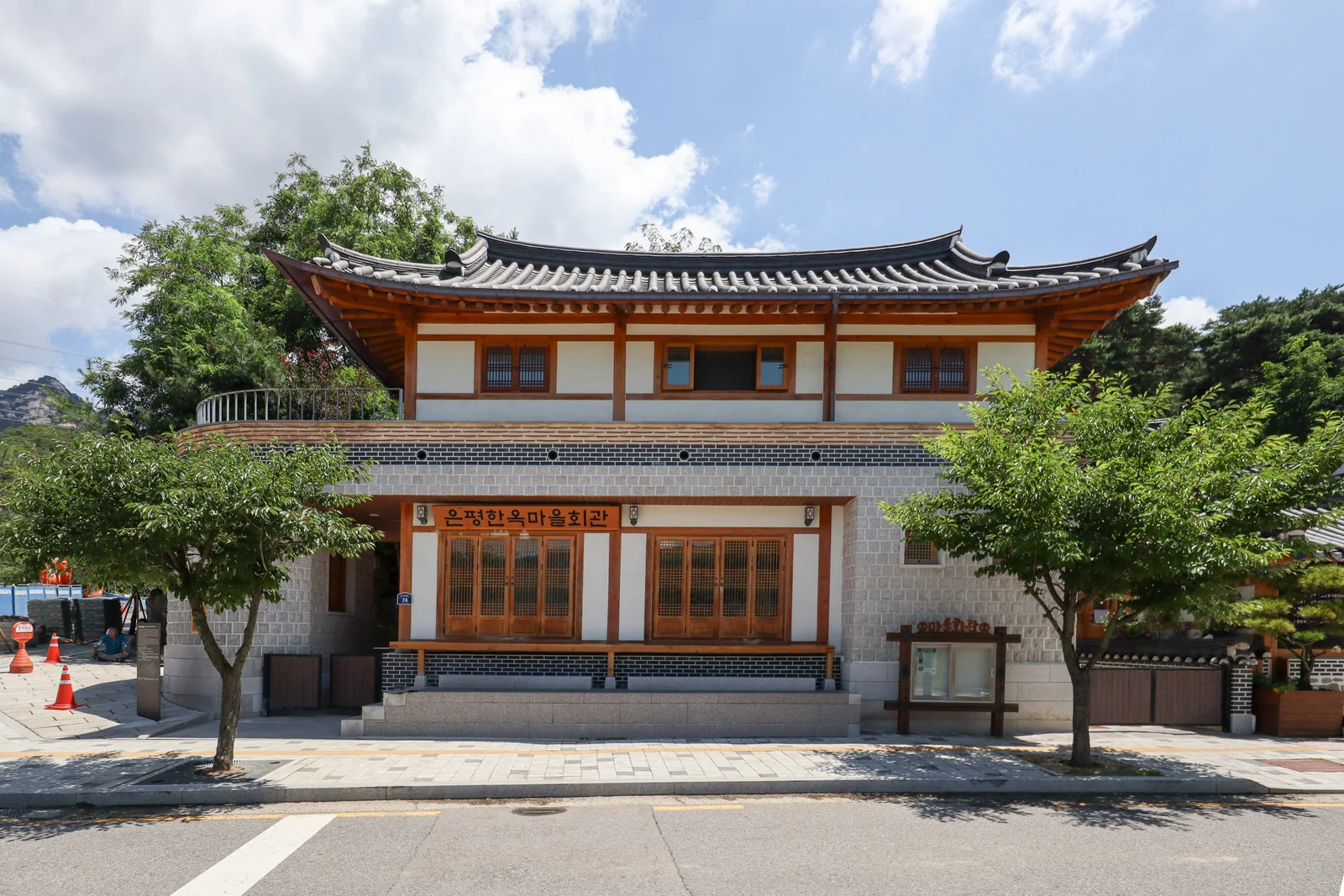
1. Begin with the house format before the neighbourhood name
The word “hanok” describes an architectural setting, not a single accommodation contract. One listing may be a whole house for one group. Another may be a guesthouse room. A third can have several bedrooms, a kitchen, a courtyard, floor bedding, stairs, or a host-managed check-in. The photo that makes you want to book is often the least useful piece of the listing when you are carrying luggage or deciding where four people will sleep.
Seoul Stay’s record for Hanok 201 identifies five bedrooms, three bathrooms, a small kitchen and yard, with capacity listed up to 12. Its record for Seoul Hanok Stay jnpstay describes one team using the whole house and notes separate room arrangements. These are examples of why a visitor should read the published unit format rather than assume every hanok works like a hotel room. The directory does not settle your exact date, the live house rules, or whether the listed layout fits your party.[4][5]
Start your inquiry with one plain sentence: “Is the listed unit the entire house for my party, or one room within a shared property?” Keep the answer with the confirmation. It changes the bathroom question, late-arrival procedure, noise expectations, and the realistic amount of space you are buying.
2. Bukchon and Eunpyeong solve different planning problems
Bukchon is useful when you want a central Jongno address near the old-city cultural corridor. That does not mean every Bukchon lane is easy with wheels, quiet after dark, or close to the same transit exit. Eunpyeong gives a different address pattern on Seoul’s northwest side. It may suit a traveller who wants that location, but it is not a promise of a view, silence, privacy, or a simpler arrival. Treat both names as a prompt to inspect the exact street and host instructions.
The public records make the contrast concrete without turning it into a ranking. Rakkojae Seoul Bukchon is recorded at 218 Gahoe-dong, Jongno-gu. Hanok 201 is recorded at 40-3 Bukchon-ro, Jongno-gu. Deokseonjae is recorded at 17-1 Yeonseo-ro 50-gil, Eunpyeong-gu. These addresses establish neighbourhood context. They do not prove a walking time, a hill grade, luggage access, a taxi drop point, or the current condition of the route.[1][2][4][6]
Choose Bukchon when a central Jongno address is the part you can verify and you are willing to confirm lane access directly. Choose Eunpyeong when the listed address and house format work for your trip after the same check. The useful choice is the property whose written details fit your arrival, sleeping arrangement, and cancellation tolerance.
CHOOSE YOUR NEXT QUESTION
Continue through the issue
3. Check the sleeping surface and bathroom before you compare interiors
A hanok listing can make a floor mattress look like part of the mood. For some visitors it is comfortable; for others it changes the trip. Ask whether the listed sleep arrangement is a bed, floor bedding, or a mixture, how many people share it, and whether the configuration is fixed for your dates. Do not infer this from a room photograph or a property’s general description.
Seoul Stay’s Deokseonjae record describes a two-storey detached house with two rooms and one bathroom, while its SAJEOGIN record identifies a whole-house format with two queen beds and two bathrooms. Those published differences show why “hanok stay” is too broad to answer the question a traveller is actually asking: where will my party sleep, and which bathroom belongs to the booked unit? The records do not establish stair use, current room allocation, accessibility, or whether another amenity is available on a particular date.[6][7]
Use exact words in your message. Ask whether the bathroom is private, shared, inside the booked unit, and reached without stairs. If any answer matters to your trip and the reply stays vague, keep the property on hold. A traditional building does not remove the need for an ordinary accommodation standard.
4. Send these nine checks before a deposit or non-refundable rate
The following list works across Bukchon, Eunpyeong, and any other Seoul address. It is deliberately about terms a directory may leave open. A good reply does not make a property better than another one. It simply gives you enough information to decide whether to continue.
1. What exactly is booked: the whole house, one room, or a room while other guests or a host remain on site? 2. What is the sleeping setup for my party: bed, floor bedding, room sharing, and number of people per room? 3. Is the bathroom private, shared, inside the booked unit, and reached without stairs? 4. What are the exact check-in, latest-arrival, luggage-drop, and check-out steps for my date? 5. Which quiet-hours, visitor, party, smoking, filming, and late-evening rules apply? 6. Does the last part of the route involve steps, an uphill lane, a narrow vehicle approach, or a walk from the drop-off point? 7. Which language will be available for arrival instructions and urgent contact on my dates? 8. If breakfast, cooking, a yard, or an activity is listed, is it included for my exact booking and are any conditions published? 9. Which cancellation, date-change, deposit, payment-card, tax, and refund terms apply to this booking channel?
The two Seoul Stay records show why check-in information belongs beside room information. Seoul Hanok Stay jnpstay lists 16:00 / 11:00 and one team for the full house. Deokseonjae lists 15:00 / 11:00 and a two-storey detached-house format. Neither record supplies a universal late-arrival process, luggage handoff, payment rule, or cancellation route. Those details still need a current property-specific answer.[5][6]
The Seoul Stay programme describes its listed stays as registered with local districts and supported by the Seoul Metropolitan Government. That helps a reader identify a public directory. It is not a quality score, a safety endorsement, a promise of availability, or a substitute for the property’s current terms. The nine questions remain necessary even when a listing appears in a public programme.[8]
5. Read the published record as a starting point, not a reservation
Korea Tourism Organization’s record for Bukchonmaru Hanok Guesthouse publishes an address, a three-room format, listed check-in and check-out times, and a named operator website. Those details are useful for initial orientation. They do not confirm today’s calendar, cancellation terms, foreign-card acceptance, host response time, live room allocation, or whether a specific breakfast offering applies to your booking.[3]
The same boundary applies to every card in this guide. A directory can help you identify a property and its published format. It cannot sign you in, carry your suitcase through a lane, or tell you what happens if a flight delay pushes you past the stated arrival time. Keep the host’s dated answer, booking message, or official confirmation with the rest of your travel documents.
Avoid making one field do too much work. English listed on a directory is not a guarantee of a live English conversation. A check-in time is not a late-arrival policy. A whole-house label is not proof that a group can make noise. A listed address is not a transit instruction. The property must confirm the exact operational detail that affects you.
6. Hanok stay and temple stay are separate decisions
A city hanok stay is an accommodation decision with house-format and neighbourhood questions. A temple stay is a programme decision with participation, schedule, meal, silence, and conduct expectations. The two can sit in the same Korea itinerary, but one should not be sold as a substitute for the other. If you want a structured religious programme, use the Temple Stay in Korea guide and verify its current timetable directly with the organiser.
A hanok can be a meaningful way to notice floor-level living, a courtyard, and the care required in a residential district. That is cultural context. This guide does not claim that ondol, a quieter address, tea, or a traditional room treats sleep problems, reduces stress, or produces a health result.
7. Keep the final decision deliberately small
You do not need to identify one top Seoul hanok. You need a property whose answer sheet matches your party, sleep needs, bathroom requirements, arrival plan, and willingness to accept the stated cancellation rule. If a required answer is missing, do not turn hope into a booking decision.
Use the Hanok Stay Fit Check below to build a browser-local inquiry list. It does not search live inventory, recommend properties, contact a host, collect your details, or process payment. It only makes the unknowns visible before a non-refundable choice does.
ISSUE COMPANION
Four public-record examples to read carefully
These records are examples of different published formats, not a ranking or live availability list. Recheck the exact operator or booking record before payment.
Rakkojae Seoul Bukchon
Bukchon identity and address record: 218 Gahoe-dong, Jongno-gu. Confirm the live operator flow, room format, arrival process, payment, and cancellation terms directly.
Public records identify the property and address. They do not verify live availability or terms.Hanok 201
Bukchon record with five bedrooms, three bathrooms, a small kitchen and yard, and listed capacity up to 12. Confirm the current unit, stairs, sleeping layout, and group rules.
A directory layout is not a booking confirmation.Seoul Hanok Stay jnpstay
Jongno record that lists one team for the full house, 16:00 / 11:00, room arrangements, English, and transit notes. Confirm host contact, late arrival, noise, payment, and cancellation terms for your dates.
Do not infer a current Airbnb calendar or host policy from the directory.Deokseonjae
Eunpyeong record that lists a two-storey detached house, two rooms, one bathroom, listed English, and 15:00 / 11:00. Confirm stairs, exact room setup, payment, and cancellation before paying.
The address gives context, not a promise about access or quiet.BROWSER-ONLY PLANNING TOOL
Hanok Stay Fit Check
Turn nine booking boundaries into a property-specific question list. No search, booking, inquiry, payment, storage, or selected-answer analytics happens here.
EVIDENCE & EDITORIAL RECORD
How this story was made
Turns Bukchon and Eunpyeong address choices into nine property-specific pre-payment checks, then adds a browser-local Hanok Stay Fit Check that makes unknown booking terms visible before a reservation decision.
Firsthand scope: No property visit, room inspection, host conversation, booking, payment, route test, luggage test, language test, availability check, or quality ranking is claimed.
What we checked
- Korea Tourism Organization and Seoul Stay records identify limited published format and address details for Rakkojae Seoul Bukchon, Bukchonmaru Hanok Guesthouse, Hanok 201, Seoul Hanok Stay jnpstay, Deokseonjae, and SAJEOGIN.
- The Seoul Stay programme describes listed stays as registered with local districts and supported by the Seoul Metropolitan Government; this establishes a public directory context rather than a quality, safety, or availability endorsement.
- The reviewed records show different room, bathroom, whole-house, and listed check-in patterns, while leaving date-specific terms such as late arrival, luggage handoff, payment, cancellation, and exact language support for direct confirmation.
Verify before you use this guide
- Exact property, booked unit, party limit, bed or floor-bedding arrangement, bathroom privacy, stairs, accessibility, and included items for the travel date.
- Final approach, drop-off point, luggage process, check-in, latest arrival, urgent-contact language, quiet hours, visitor, party, smoking, and filming rules.
- Current availability, total KRW price, taxes, payment-card acceptance, deposit, cancellation, date-change, refund, and reservation-confirmation terms through the exact booking channel.
Review dates describe editorial work, not a venue visit or publication date. Read the sourcing and corrections policy →
PRIMARY RECORDS