Book the program type, not a generic idea of Temple Stay
Start on the official Templestay reservation site, then open the individual temple and program page. VisitKorea describes Templestay as an opportunity to encounter Korean Buddhist daily life, rituals, and culture; it also notes that programs commonly include elements such as a service, Seon meditation, 108 prostrations, communal work, meal practice, tea, or lantern making. “Commonly” is the important word. A one-day cultural session, an overnight experiential program, a freer rest-oriented stay, and a specialist food or movement program do not ask the same things of a participant.Korea Tourism Organization, VISITKOREA: Templestay overview and official reservation route
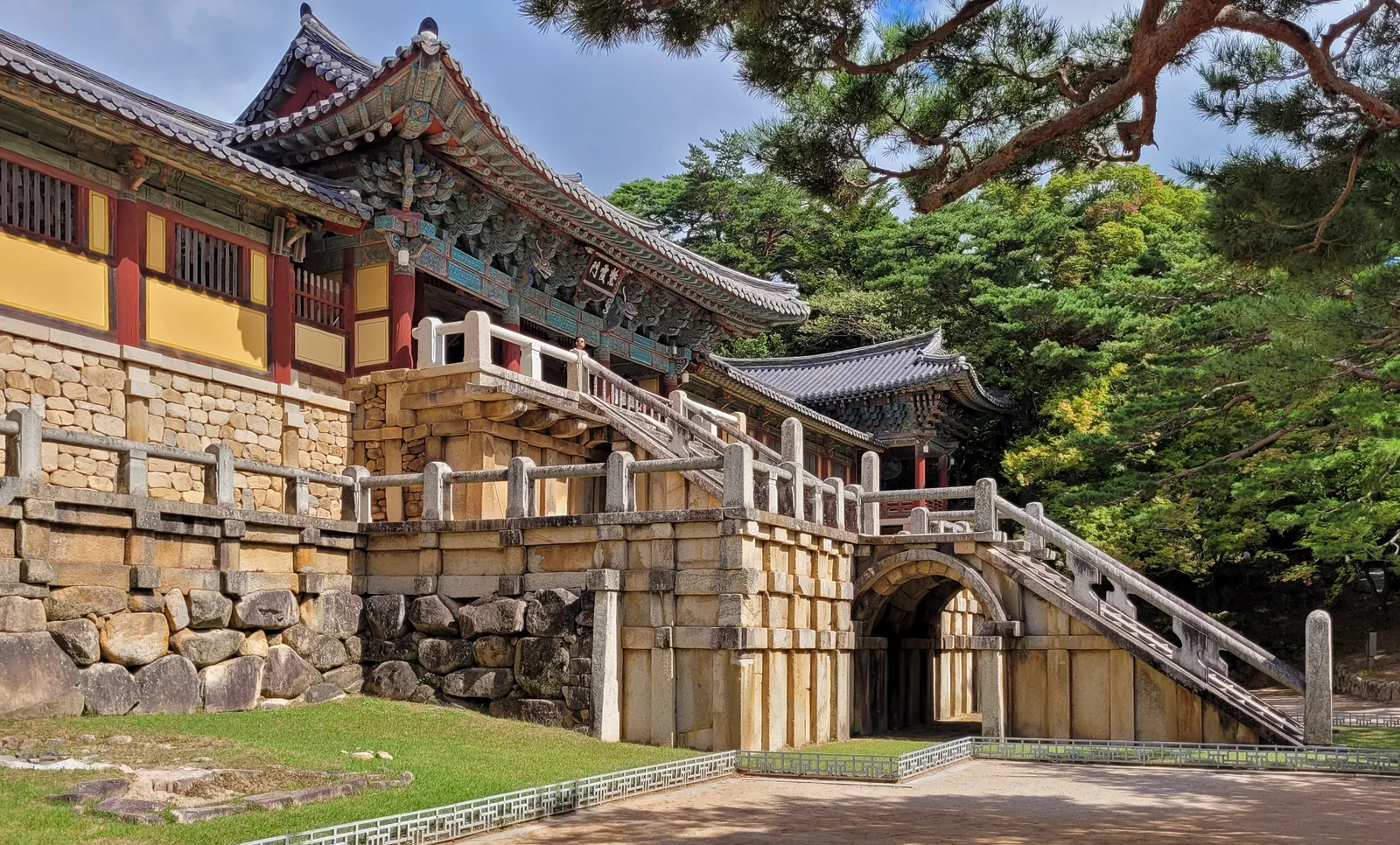
Use the calendar, not a blog post, to decide whether a date is actually available. The official FAQ says dates may be unavailable because of a temple’s schedule, and its current listings are the right place to check before asking to change a reservation. Bulguksa’s official Templestay page is a useful example of why this matters: it lists separate two-day, one-night programs, a stated check-in time, and a notice that schedules can change with season, weather, participant numbers, temple events, or other circumstances.Templestay Cultural Corps of Korean Buddhism: FAQ on reservations, rooms, packing, and participation Templestay Bulguksa: current programme, check-in, preparation, and schedule-change guidance
Before paying or travelling, confirm five practical points in writing: the programme language; arrival time and exact meeting point; whether the listing is day-only or overnight; the room configuration and who may share it; and the cancellation or change contact. Do not infer English support from a temple’s English-language homepage. Ask whether the orientation, activities, and staff contact will be in English on your specific date. If the answer is partial, decide whether that is acceptable before you book.Templestay Cultural Corps of Korean Buddhism: FAQ on reservations, rooms, packing, and participation Templestay Bulguksa: current programme, check-in, preparation, and schedule-change guidance
A schedule is a frame, not a minute-by-minute guarantee
An overnight schedule may include check-in and orientation, a temple tour, a meal, an evening observance, a quiet activity, sleeping, an early morning activity, breakfast, cleaning, and departure. That is an orientation tool, not a promise that every temple follows the same clock. Some programmes are designed around participation; others leave more unscheduled time. Some temple buildings are in dense cities, while others involve mountain roads, colder weather, or a separate accommodation building.
Read each activity by its role. A Buddhist service or chanting period is an observance, not stage entertainment. A meal may be called gongyang, which signals a shared meal practice with its own instructions. Meditation, bows, tea, work, and walking can be offered in very different forms. If an activity is unfamiliar, ask at orientation what guests are expected to do, whether an observer option exists, and how to signal that you need to step out.
The central Templestay FAQ says that participants who do not feel well or are too tired may rest in their room after telling staff they will skip a programme. That is useful operational information, but it is not permission to disappear without notice or to treat every rule as optional. Tell the coordinator early, follow the answer for that programme, and do not assume an individual temple can rearrange an observance around a late arrival.Templestay Cultural Corps of Korean Buddhism: FAQ on reservations, rooms, packing, and participation
Dress for a shared religious site, then confirm what the temple supplies
Many programmes provide a simple vest-and-pants uniform, but the official FAQ says that what is provided varies and commonly lists only basic items such as soap, toothpaste, and a temple uniform. Bring your own towel, toiletries, underwear, socks, a change of clothes, and anything personally necessary. Bring an outer layer for mountain weather even in a warm travel itinerary. Bulguksa additionally advises easy-on, easy-off shoes, a sleeved top, and avoiding sleeveless or low-cut tops beneath the vest.Templestay Cultural Corps of Korean Buddhism: FAQ on reservations, rooms, packing, and participation Templestay Bulguksa: current programme, check-in, preparation, and schedule-change guidance
This is not an invitation to invent a universal dress code for Korean Buddhism. It is a practical way to avoid arriving unable to participate comfortably. Choose clean, modest, movable clothing for transit and activities; check whether the site has stairs, unpaved paths, or floor seating; and ask before booking if you need a ground-floor room, a particular bed arrangement, mobility support, food-related accommodation, or help carrying luggage. “Accessible” is a venue-specific question, not a claim a travel article can make for every temple.
Room arrangements need the same specificity. The official FAQ says that mixed-gender room sharing is not allowed and that some temples may offer paid private rooms for small groups, while communal accommodation remains common. Confirm the room type, bathroom arrangement, bedding style, temperature control, and the policy for children or companions before assuming a private hotel-style room is available.Templestay Cultural Corps of Korean Buddhism: FAQ on reservations, rooms, packing, and participation
Meals, phones, and silence are participation boundaries
Temple food is often part of the experience, but do not turn that phrase into an assumption that every meal meets your dietary, allergy, religious, or medical needs. Ask the individual temple before booking about ingredients, allergens, vegan or other requirements, and whether outside food is permitted. If a restriction is essential, get a clear answer and prepare a realistic alternative plan rather than relying on a general description of temple cuisine.
At meals, follow the staff demonstration and posted instructions. Take only what you can finish if that is the local instruction; do not photograph other participants; and ask before recording food, a ceremony, or a monk. Put the phone on silent before arrival, use it only where permitted, and ask rather than assuming that a scenic courtyard is a content set.
Respect is usually clearest in small actions: arrive on time, use the supplied spaces as instructed, keep shared areas quiet, wear the requested clothing, and do not treat staff as performers or other guests as background footage. You do not need religious expertise to participate courteously. You do need to recognise that a booking places you inside another community’s schedule and boundaries.
Make the final decision with a practical exit plan
The best first booking is often the one with the clearest logistics, not the most dramatic location. If you are short on time or uncertain about early starts, choose a clearly labelled day programme. If you want an overnight stay, leave enough buffer after check-out for transport rather than booking a tight flight or intercity connection. For a mountain temple, verify the final bus or taxi plan, weather exposure, luggage handling, and whether the accommodation is on the main grounds.
Save the reservation confirmation even though the official FAQ says a printed confirmation letter is not required because temples have reservation lists. Keep the booking name, participation date, temple name, arrival contact, and a screenshot of the programme page on your phone. If confirmation does not arrive, the FAQ advises contacting the temple directly or the Templestay support address with those details. If you need to cancel or change, contact the booked temple first and check the live calendar rather than assuming another date is open.Templestay Cultural Corps of Korean Buddhism: FAQ on reservations, rooms, packing, and participation
A temple stay can be a thoughtful cultural visit without being a test of endurance, a spiritual identity claim, or a cure for a difficult period. Choose the format you can follow, communicate needs early, and let the temple’s current instructions outrank travel lore. That is the practical boundary that makes the visit easier for both guests and hosts.
ISSUE COMPANION
Temple Stay booking and arrival checklist
Complete this before travel. A yes based on an old review is not confirmation.
- Programme fit
Confirm day-only, overnight, experiential, or freer-stay format and the live date on the official calendar.
- Language and contact
Ask which parts are supported in English and save the temple’s arrival contact.
A translated webpage does not guarantee an English-led session. - Arrival plan
Confirm check-in time, meeting point, last-mile transport, weather exposure, and a buffer for delays.
- Room and access needs
Ask about shared or private rooms, bedding, bathrooms, stairs, mobility support, and companion rules.
- Food confirmation
State allergies and essential dietary requirements before booking; ask what can and cannot be accommodated.
- Packing and conduct
Bring toiletries, towel, socks, spare clothes, outerwear, and quiet phone settings; follow the temple’s clothing and photography rules.
- Change or cancellation
Keep booking name, date, temple name, and current contact details; use the temple’s stated process before changing plans.
EVIDENCE & EDITORIAL RECORD
How this story was made
Replaces a generic retreat frame with programme-specific checks for schedule, rooms, food, conduct, participation, transport, and an exit plan.
Firsthand scope: No temple stay, accommodation inspection, religious participation, or restorative outcome is claimed.
What we checked
- KTO and Templestay records describe programmes that vary by temple and schedule.
- Bulguksa's official page says schedules can change with season, weather, participants, or temple events.
Verify before you use this guide
- Live programme, language, check-in, transport, rooms, food, and cancellation route.
- Current photography, conduct, accessibility, and participation instructions.
Review dates describe editorial work, not a venue visit or publication date. Read the sourcing and corrections policy →
READER INTEREST SIGNALS
What people are asking
These links helped us identify the question. They are not evidence for the factual claims in this article.
- Reddit interest signal: English-language clarity · A traveller discussion compares whether orientations and programmes are actually understandable in English. Treat this as a question pattern, not evidence of current temple provision.
- Reddit interest signal: central-Seoul format comparison · A recent post highlights demand for short, overnight, and English-supported options near transit. Verify every programme detail on the official listing before relying on it.
PRIMARY RECORDS